Crowds vs. experts
Research directionWho forecasts political, economic and social events more accurately – experts or groups of people?
The Lithuanian Prediction Markets Institute (LPMI) is being developed as an independent, non-profit Lithuanian initiative dedicated to prediction markets, collective intelligence and modern forecasting methods.
We study how forecasts made by the public, experts, markets and artificial intelligence can help assess the probability of future events and support better informed decisions across society, business and public policy.
Research • Forecasting • Collective Intelligence
Lithuania • Baltics • Europe
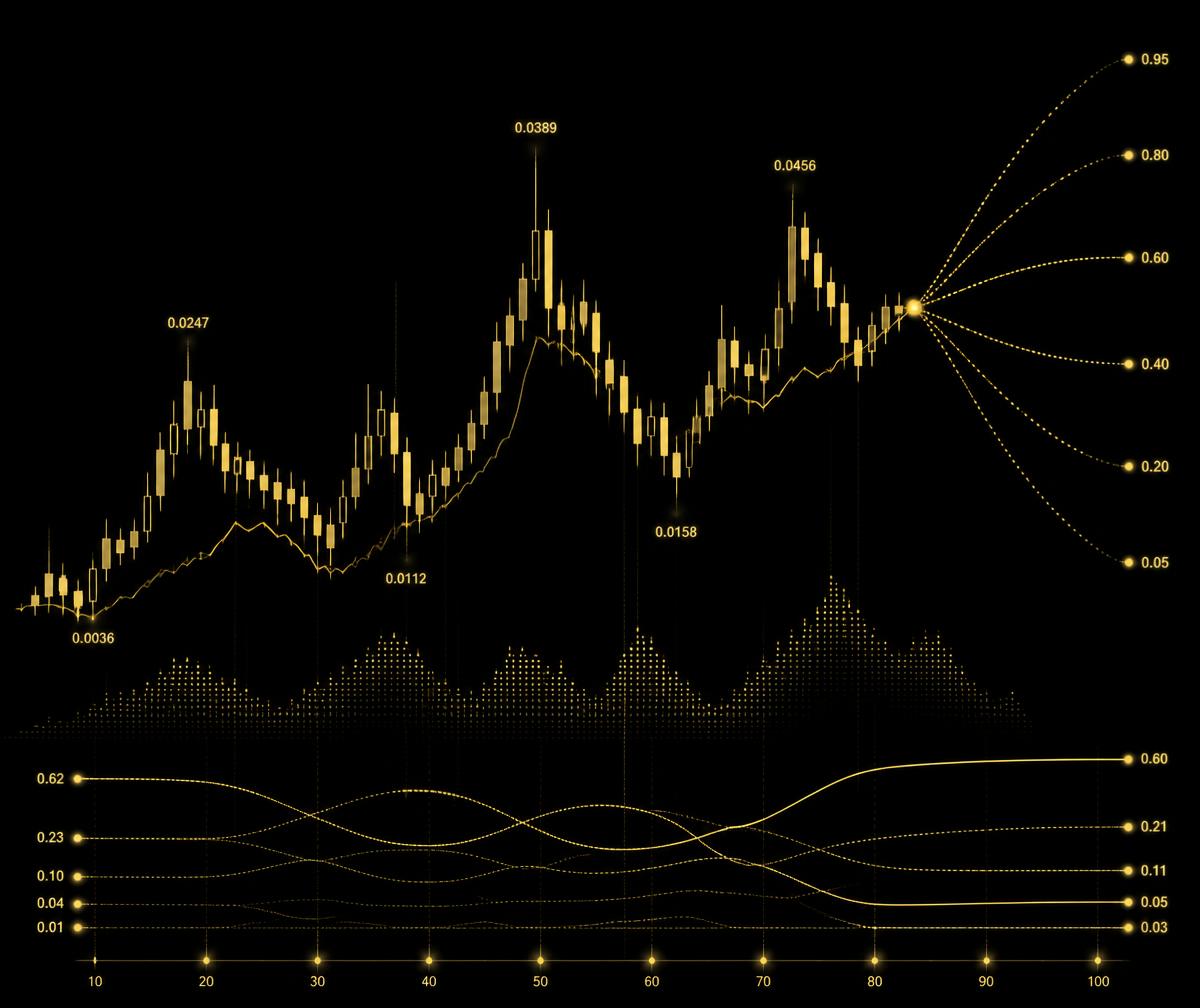
What's the probability?
Methodology in development
About us
The Lithuanian Prediction Markets Institute (LPMI) is being developed as an independent, non-profit Lithuanian initiative dedicated to prediction markets, collective intelligence and modern forecasting methods.
Our goal is to foster a forecasting culture in Lithuania and the wider Baltic region, while contributing to the European discussion on how probabilistic thinking can be applied in economics, politics, business, technology, science and the public sector.
Prediction markets allow people not only to express an opinion, but to quantify how likely a specific event actually is.
The question we care less about
“What will happen?”
The question that matters more
“How likely is it to happen?”

Founder
Founder of LPMI
Giedrius Gestautas is developing the Lithuanian Prediction Markets Institute as an independent, non-profit Lithuanian initiative. His areas of focus include prediction markets, collective intelligence, forecasting methods and related regulatory questions in Lithuania, the Baltic region and Europe.
To advance forecasting culture, prediction markets and collective intelligence methods in Lithuania and across the Baltic region.
To improve public understanding of probability, forecasting and decision-making, and to encourage the responsible use of these methods in business, the public sector, science and society.
Our vision is for Lithuania and the Baltic region to become an active part of the European forecasting ecosystem, where prediction markets, collective intelligence, data and artificial intelligence help people and institutions better understand future scenarios and make better decisions.
What we do
We study how market mechanisms aggregate information held by many people and turn it into a probability estimate for an event.
We analyse when groups forecast more accurately than individual experts, and the conditions under which the wisdom of crowds works.
We compare forecasts made by artificial intelligence, experts and groups, and track how AI is reshaping forecasting workflows.
We research methods for forecasting elections, economic indicators, geopolitical events and public policy outcomes.
We analyse forecast accuracy, calibration, Brier scores and other ways of measuring forecast quality.
We analyse regulatory models for prediction markets in Lithuania, Latvia, Estonia, the European Union, the United States and other jurisdictions.
A prediction market is a mechanism that lets participants estimate the probability of a future event.
A traditional poll asks
“What do you think?”
A prediction market asks
“How likely is this to actually happen?”
This difference is what allows prediction markets to work as information aggregation mechanisms.
An opinion and a forecast are not the same thing. Someone may support candidate A while still believing that candidate B will win the election.
Research
Who forecasts political, economic and social events more accurately – experts or groups of people?
How do generative AI forecasts compare with human forecasters and prediction market prices?
Regular tracking of public expectations and probabilities for key events in Lithuania.
Key forecasts recorded at the start of the year and objectively scored for accuracy at year end.
Selected research programmes may later expand to include comparative forecasting data from Latvia and Estonia.
See upcoming researchForecasting is more than voicing an opinion. A quality forecast requires:
The institute will promote a culture in which forecasts are not only published, but systematically scored for accuracy.
Many important decisions depend on an assessment of the future.
Yet forecasts often go unchecked. LPMI works towards an environment where forecasts are stated clearly, recorded and later evaluated objectively.
Research results must not depend on political or commercial interests.
Forecasting methods, questions and scoring criteria must be clear.
The institute does not support any political party, candidate or ideology.
Conclusions must be grounded in data and verifiable outcomes.
We treat prediction markets first and foremost as tools for information aggregation, forecasting and decision-making.
LPMI may collaborate with a range of forecasting platforms, academic institutions and technology projects. One possible experimental platform is the Lithuanian forecasting platform “Speju”.
LPMI and “Speju” operate as separate projects. The institute focuses on research, education and methodology, while technology platforms can provide a way to test collective forecasting methods in practice.
Over time, the institute aims to work with a variety of Lithuanian and international forecasting and prediction markets organisations.
Publications
Analyses, commentary and industry insights. Research covers original LPMI work; publications provide context and wider analysis.
On 1 October 2026, LPMI will attend the Global Prediction Markets Forum in Lisbon, Portugal – a one-day event for prediction market builders, operators and regulation specialists.
26 September 2026 · 2 min read
Read →On 9 September 2026, the Tema Trading & Prediction Markets ETF (DICE) began trading on Cboe in the US. How does this fund differ from prediction market contracts, and what does it mean for the sector?
26 September 2026 · 3 min read
Read →The stalled Digital Asset Market Clarity Act in the US Senate exposed a far broader conflict than disagreements over crypto: should trading event contracts on sports, elections and other real-world events be treated as financial market activity or as gambling?
21 September 2026 · 7 min read
Read →For media
Commentary on prediction markets, regulation, collective intelligence and forecasting methods.
Giedrius Gestautas · Founder of LPMI
Baltic perspective
LPMI is based in Lithuania, but our research perspective extends across the Baltic region.
Lithuania, Latvia and Estonia provide a particularly interesting environment for studying forecasting, collective intelligence, technology and data-driven decision-making.
LPMI aims to encourage cooperation between researchers, universities, technology companies, forecasting communities and institutions across the three Baltic states.
Over time, we hope to contribute to a stronger Baltic forecasting ecosystem connected to wider European and international research networks.
Research base
Regional cooperation
Regional cooperation
Partnerships
Prediction markets are an interdisciplinary field spanning economics, statistics, political science, psychology, technology and artificial intelligence. LPMI therefore seeks to build partnerships in Lithuania, across the Baltic region and internationally – with:
We invite universities, researchers, experts and organisations in Lithuania and across the Baltic region to help develop forecasting culture.
LPMI is based in Lithuania, but our perspective extends across the Baltic region and Europe.
Prediction markets and collective forecasting methods are developing rapidly worldwide.
We aim to build connections between Lithuania, Latvia and Estonia and the wider international forecasting ecosystem, bringing together researchers, technology companies, prediction market platforms, policymakers and academic institutions.
Our goal is not to copy one particular model, but to understand how forecasting systems and prediction markets can be responsibly developed and applied in Lithuania and the wider Baltic region.
The institute is being developed as an independent, non-profit Lithuanian initiative with a Baltic and European research perspective.
It is being developed as a long-term platform for forecasting research, public debate, education and international cooperation.
New research, forecasting experiments, international prediction markets news and LPMI publications.
We store your email only for LPMI news. No regular schedule is promised; you will be able to unsubscribe at any time.
Contact
If you represent a university, the media, a technology company, a public sector organisation, or you are simply interested in forecasting – send us a message using the form.
General enquiries
info@lpmi.ltMedia & Press
media@lpmi.ltMedia enquiries are directed to media@lpmi.lt; other topics go to giedrius@lpmi.lt. Submitted data is used only to respond.